Conquering Umling La & Khardung La: Driving the World’s Highest Motorable Passes Safely
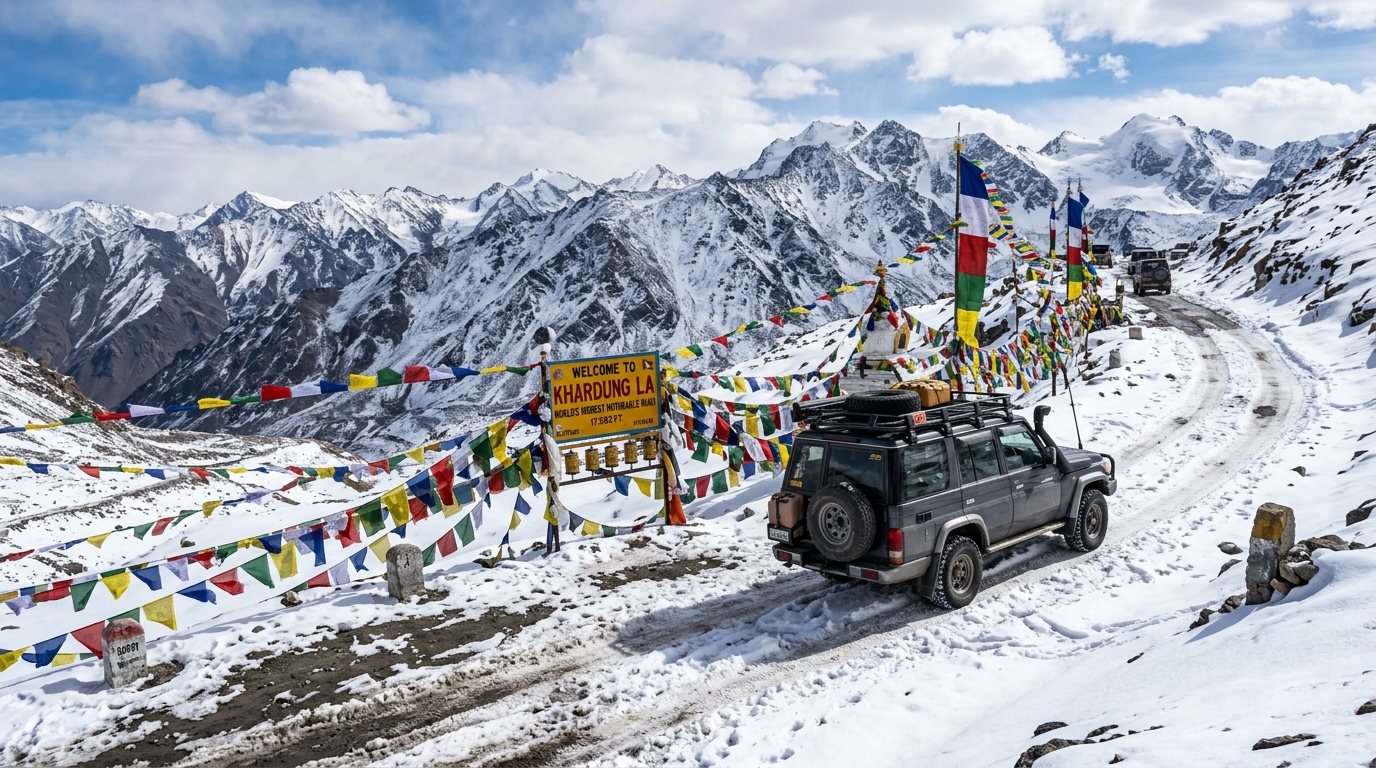
Conquering Umling La & Khardung La: Driving the World’s Highest Motorable Passes Safely
Reaching the summit of Umling La (19,024 feet)—the highest motorable pass in the world—and crossing the legendary Khardung La (18,380 feet) are badge-of-honor achievements for overland drivers. Located in the Trans-Himalayan region of Ladakh, these extreme passes present breathtaking scenery alongside steep climbs, thin air, unpredictable weather, and black ice.
Here is the essential driving guide for conquering the world’s highest motorable passes safely.
1. Understanding Altitude Engine Power Drop
As altitude rises, atmospheric pressure and air density decrease dramatically.
- Naturally Aspirated (NA) Petrol/Diesel Engines: NA engines lose roughly 3% to 4% of engine power for every 1,000 feet of elevation gain. At 19,000 feet, an NA engine will lose nearly 55-60% of its sea-level power output.
- Turbocharged (Turbo) Engines: Turbochargers force compressed air into combustion chambers, mitigating altitude power loss. However, turbo lag is noticeably pronounced at high elevations.
- Clutch & Gear Selection: Shift down early to keep engine RPMs in their torque band. Avoid riding the clutch during steep hairpin climbs to prevent clutch plate overheating.
2. Brake Management on Steep Descents
Descending from 19,000 feet back down to 11,000 feet places immense thermal strain on your braking system.
- Engine Braking: Shift your transmission into 2nd or 1st gear (or Low-Range 4L on extreme gravel descents). Allow engine compression to control vehicle speed rather than riding the foot brake continuously.
- Preventing Brake Vapor Lock: Riding brakes down a 30 km mountain descent boils brake fluid, introducing air bubbles into hydraulic lines and causing sudden, total pedal loss (vapor lock). Use short, firm braking bursts to shed speed, then release the pedal to cool the rotors.
3. Black Ice & Snow Cautions
Black ice is a thin, transparent layer of frozen water on asphalt that is nearly impossible to spot from the driver’s seat.
- Where Black Ice Forms: Shaded mountain curves, snowmelt runoffs across tarmac, and bridge decks early in the morning.
- Driving Technique: Maintain gentle, smooth steering inputs. Never slam on brakes or make abrupt steering corrections if your vehicle loses traction on ice.
- Snow Chains: Carry fitted snow chains for all four tires when tackling passes early in the season (May-June) or late autumn (October-November).
4. Summit Etiquette & Stop Time Limits
Oxygen levels at 19,000 feet are extremely low. Lingering at pass summits poses severe medical risks.
- Maximum Stop Duration: Limit summit photo stops at Khardung La and Umling La to 15 to 20 minutes maximum.
- Keep Engine Idling: Do not turn off your engine immediately upon reaching the summit. Allow the engine to idle for 2-3 minutes to let turbochargers cool down.
- Hydration & Warm Clothing: Keep windproof down jackets, beanies, and gloves accessible inside the cabin before stepping out into sub-zero winds.
Pass Elevation Comparison
| Mountain Pass | Altitude (Feet) | Altitude (Meters) | Key Challenge |
|---|---|---|---|
| Umling La | 19,024 ft | 5,798 m | World’s Highest, Thin Air, Sub-Zero Winds |
| Khardung La | 18,380 ft | 5,602 m | Heavy Traffic, Loose Snow, Steep Hairpins |
| Chang La | 17,590 ft | 5,360 m | Rough Water Streams, Ice Patches |
| Tanglang La | 17,480 ft | 5,328 m | High Winds, Long Mountain Descent |
Driving over the roof of the world is a life-changing experience. Respect the machine, drive patiently, and conquer high-altitude passes with safety as your top priority!