Choosing the Right Tires for Himalayan Overlanding: AT vs MT vs HT Tires Tested
Choosing the Right Tires for Himalayan Overlanding: AT vs MT vs HT Tires Tested
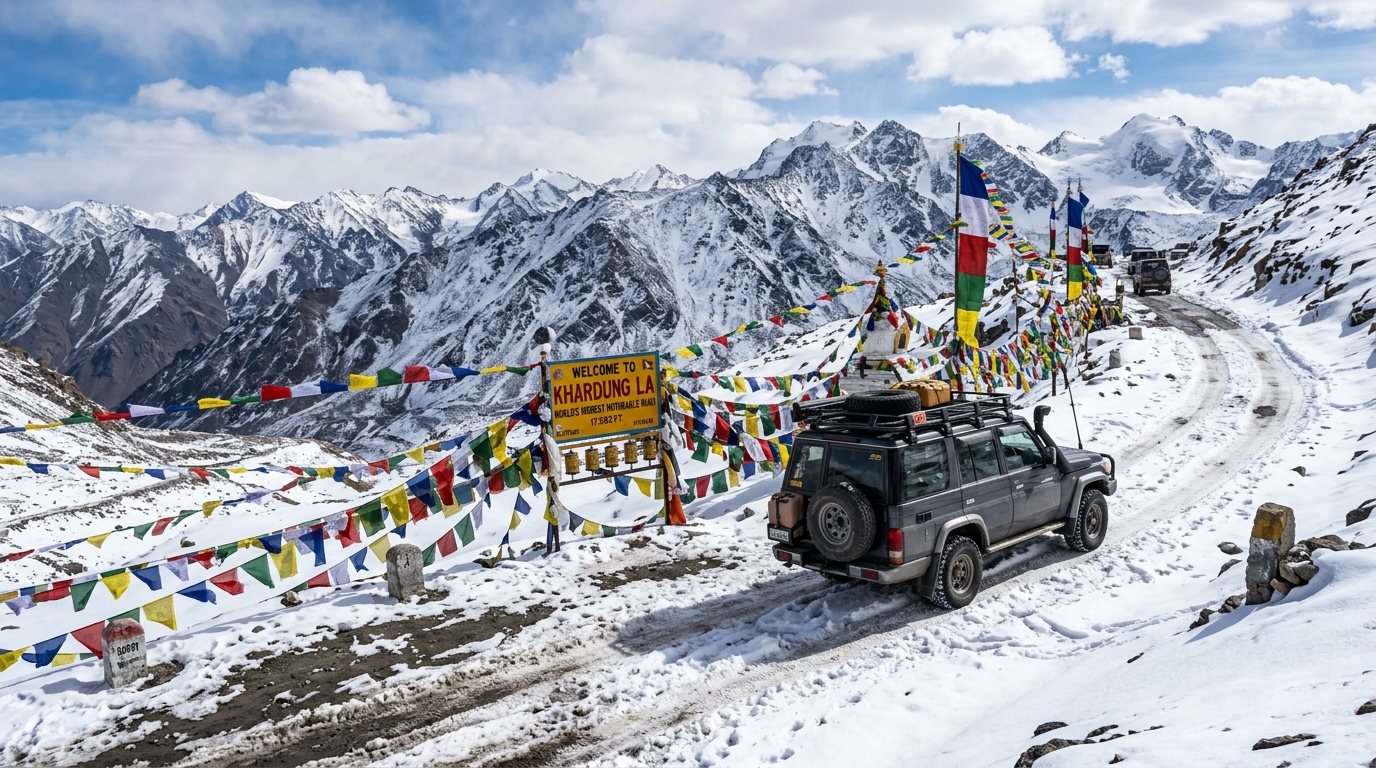
Your vehicle’s tires are the single point of contact between your 2.5-ton 4x4 SUV and the terrain. On a 3,000 km Himalayan expedition across highway tarmac, wet slush, sharp shale mountain passes, and river crossings, your choice of rubber directly impacts safety, traction, braking distance, and puncture resistance.
Here is a breakdown of Highway-Terrain (HT), All-Terrain (AT), and Mud-Terrain (MT) tires, helping you choose the right rubber for your expedition.
1. Highway-Terrain (HT) Tires: The Stock Limitation
Most stock 4x4 SUVs (such as stock Fortuners, Scorpios, or Endeavours) ship from factory floors on Highway-Terrain tires.
- Strengths: Smooth, silent ride on highway asphalt; maximum fuel efficiency; excellent wet braking performance on paved roads.
- Weaknesses: Soft 2-ply or 4-ply sidewalls easily punctured by sharp shale rocks in Ladakh or Spiti; shallow tread channels clog instantly in clay mud; limited traction on loose gravel slopes.
- Verdict for Himalayas: Not Recommended for remote high-altitude off-roading. High risk of sidewall cuts.
2. All-Terrain (AT) Tires: The Gold Standard for Overlanding
All-Terrain tires represent the ideal compromise for long-distance expedition vehicles that cover thousands of highway kilometers before tackling rugged mountain passes.
- Strengths: Reinforced 10-ply (Light Truck / LT rated) sidewalls resistant to stone cuts; aggressive tread blocks for gravel and rock traction; acceptable highway noise and fuel economy.
- Popular Options: BFGoodrich All-Terrain T/A KO2, Maxxis 771 Bravo, Goodyear Wrangler AT SilentTrac, Continental CrossContact AT.
- Verdict for Himalayas: Highly Recommended. Offers maximum versatility across all Himalayan terrain types.
3. Mud-Terrain (MT) Tires: For Extreme Off-Road Trails
Mud-Terrain tires feature deep, widely spaced tread lugs designed to self-clean thick mud and bite into deep snow.
- Strengths: Unmatched traction in deep mud, riverbeds, and wet clay; extremely tough 3-ply sidewall construction.
- Weaknesses: Loud humming noise on highway pavement at speeds above 80 km/h; reduced braking grip on wet tarmac; higher fuel consumption.
- Verdict for Himalayas: Specialized Use Only. Ideal for hardcore off-road trail runs, but fatigue-inducing for 2,000+ km highway transits.
4. Understanding Ply Ratings & Load Index
When choosing an overlanding tire, look beyond tread pattern—check the Load Index and Ply Rating:
- Passenger Car (P-Metric) vs. Light Truck (LT): Always opt for LT-metric tires. LT tires feature thicker rubber belts and reinforced sidewalls engineered for heavy vehicle payloads and low-pressure trail driving.
- E-Load Rating (10-Ply Construction): Provides superior puncture resistance against razor-sharp slate and shale rocks commonly found on mountain passes like Zoji La and Kaza.
5. Tire Pressure Strategy Across Terrains
Carrying a heavy-duty 12V air compressor allows you to adjust tire pressure for terrain:
| Terrain Type | Recommended Pressure (PSI) | Purpose |
|---|---|---|
| Highway Transit | 32 – 35 PSI | Low rolling resistance & cool tire temperatures |
| Loose Gravel / Dirt | 22 – 24 PSI | Softer ride, reduced vibration on chassis |
| Deep Sand / Mud | 16 – 18 PSI | Maximize contact patch for flotation |
| Sharp Shale Rocks | 24 – 26 PSI | Maintain sidewall height to prevent rim strikes |
Investing in high-quality All-Terrain tires with reinforced sidewalls is the best upgrade you can make for your expedition vehicle!